SAM Device FAQ
Device and intended use
What is the SAM device intended to do?
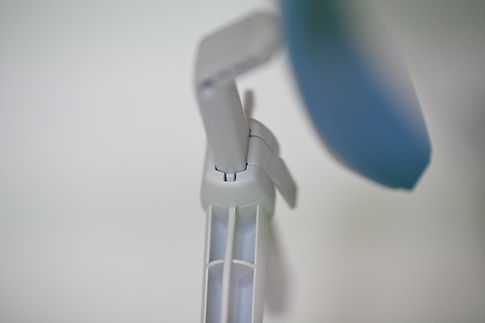
SAM provides positional support during sedation cases to help maintain the airway in a sniffing position. Its purpose is to help maintain a patent airway with less need for repeated airway manipulation.
Why was the device developed?
Airway positioning during sedation does not have a single standard of care. Current approaches may involve pillows, towels, pads, head turning, chin lifts, or other manual manipulation. SAM is designed to make positioning more stable while reducing disruption during a procedure.
Is the device invasive?
No. SAM is a non-invasive, cost-efficient disposable device. It is considered a non-significant-risk device by the FDA and has an investigational device exemption in place.
What materials contact the patient?
The patient-contacting material is foam-based. Gel pads are placed along the body of the mandible.
How is the device positioned and secured?
The anesthesia provider first places the sedated patient in the desired sniffing position and then locks the device’s arms into place. Careful placement and avoiding excessive pressure on the mandible are important.
For which patient position is the current version designed?
The current iteration is primarily designed for supine patients. It is less applicable to GI cases that are typically performed laterally. It may also have use in MRI for supine patients.
Which patients may benefit most?
SAM is expected to have the greatest impact for patients with obstructive sleep apnea, high BMI, anticipated difficult mask ventilation, or challenging sedation/MAC cases. These are anticipated use cases rather than a proven patient-selection rule.
SAM Device FAQ
Manufacturing and supply
Where is manufacturing performed?
Manufacturing and assembly is performed at one manufacturing plant in Virginia. The manufacturer has a dedicated machine for these parts, along with other lower-volume molds.
What is known about supply-chain resilience?
Materials and manufacturing are domestic, and materials are not imported from China. Manufacturing did not shut down during COVID, and material lead times are routinely monitored. Depending on the order, approximately 40,000 pounds of material may be stocked or ordered at a time for a device such as SAM.